Increasing Teacher Engagement in Online Professional Development Groups
One of my recent projects involved the evaluation of a Facebook group for English language teachers. The use of Facebook groups to support teacher development has been studied (see, for example, the open access paper by Nelimarkka et al., 2021) and various benefits to teachers of such groups have been identified, including improved knowledge and understanding, access to resources and information, social support, networking enhanced professional identity and informal learning and reflection. This research, though, has typically studied public Facebook groups run by teachers themselves. In contrast, the group I examined – British Council TeachingEnglish Courses for teachers – has some rather unique features:
- it is private
- it is moderated by tutors
- it is large (over 90,000 members)
- content is posted to the group only by the group administrator; members cannot post content themselves but they can leave comments, replies and reactions.
- content is often linked to separate free self-study online courses provided by the British Council’s TeachingEnglish global programme that many of the members do
- there are 3-4 new posts every day.
One of the objectives of the group is ‘to foster collaborative and self-directed learning through community engagement and support of meaningful interactions and relevant knowledge-sharing between members’. Two key questions for the evaluation were:
- To what extent was this objective being met?
- What factors affected the fulfilment of this objective?
To answer these questions I studied a month’s worth of group activity in detail (91 posts and 2,746 comments and replies) and also drew on Facebook analytics, member surveys and interviews with members, tutors and administrators.
In brief, the key insights from the study were:
- Reflecting trends commonly observed in social media communities, a relatively small number of members (whose identities change over time) contribute actively (by commenting on posts) while a larger sub-group read posts without commenting.
- Survey respondents identified various benefits of the group for their professional development, including increased motivation and confidence, improved knowledge and new teaching ideas.
- The kinds of posts which generated most teacher engagement were discussion starters (such as statements for teachers to complete – ‘I help learners develop their communication skills by _____’), polls and live sessions (where tutors discussed a specific topic). Posts which called for higher levels of member engagement (for example, reading and reflecting on an article) generated less response from teachers.
- Tutors played an important role in responding to member contributions and stimulating interaction in the group. Interaction was, though, largely between tutors and individual teachers, with limited evidence of interaction among members themselves.
Multiple factors related to Facebook itself, group content and member characteristics interacted in complex ways to influence how much member engagement there was in the group. A key practical insight was that when interactive online professional development groups for teachers of English are being designed a range of member characteristics need to be considered (see Figure 1 below). Teacher engagement can be viewed as a product of the alignment that is achieved between member characteristics, on the one hand, and the objectives of the online group and the assumptions made in its design, on the other.
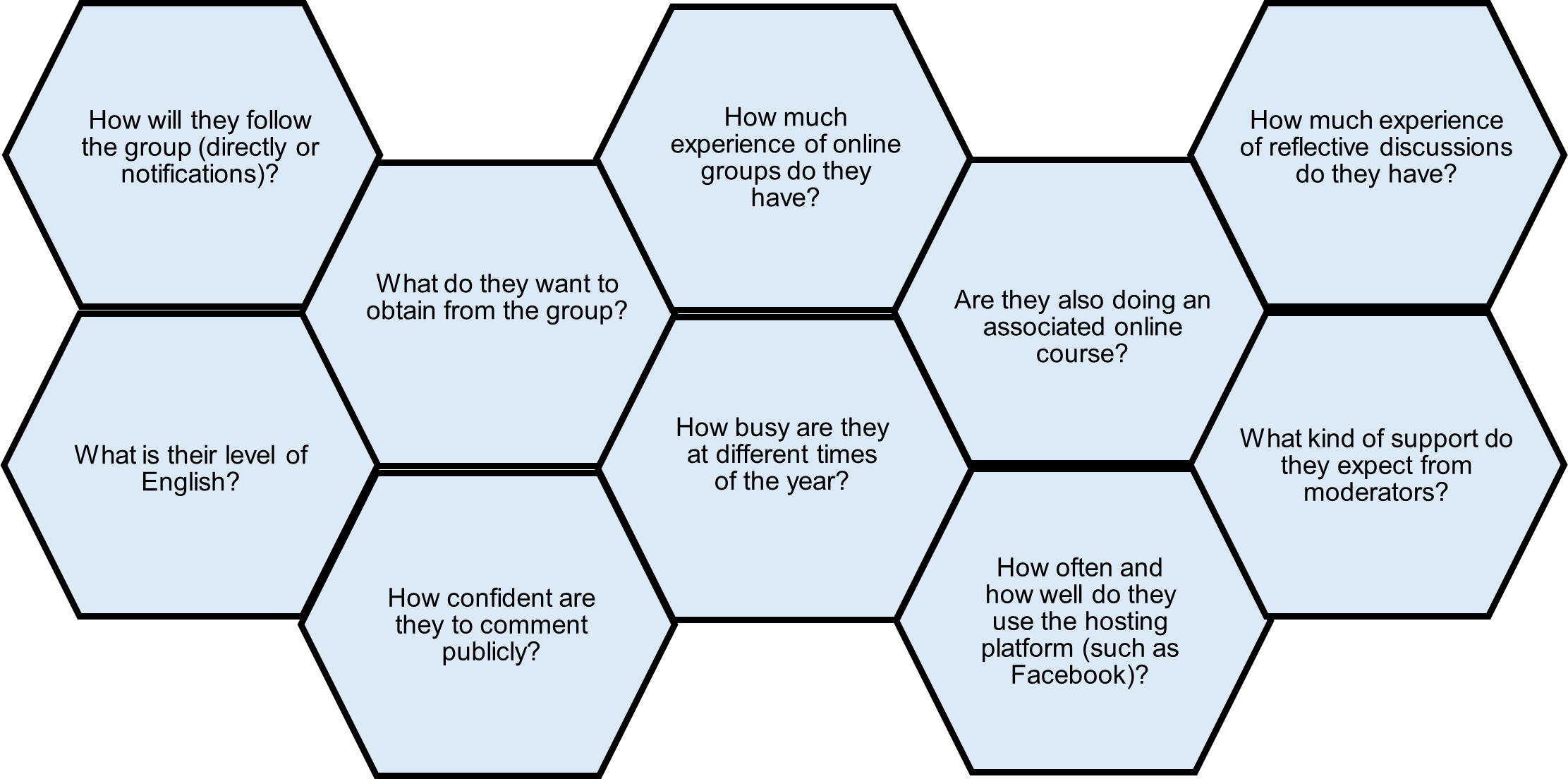
Figure 1: Member characteristics that influence their engagement in online professional development groups.
If you have designed online professional groups for teachers and have insights to share on how these can become sustained, interactive, teacher-led reflective spaces please share your experiences.