In my previous post, I described how a large-scale review of English language teaching in Iraq led to curriculum reform in Colleges of Education and Basic Education across the country. By 2025, updated curricula had been piloted and early evaluations suggested that the changes had been implemented successfully and positively received. It was also clear, though, that university curriculum reform can only achieve its goals if lecturers have the knowledge and skills to implement updated approaches to teaching and learning.
The evaluation of the implementation of the new curricula for English departments concluded that lecturers would benefit from opportunities to develop their general pedagogical knowledge and skills. Consequently, in 2025-26 I designed and delivered a national professional development programme for College English lecturers focusing on these areas:
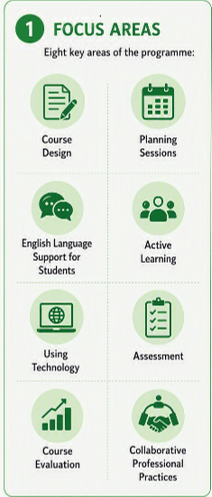
The programme consisted of three days of face-to-face work followed by four months of practical applied work. The group size was almost 50; this was purposefully large as I wanted to demonstrate that active and interactive student-centred pedagogical approaches can be applied even in larger classes.
The face-to-face sessions combined input with discussion, reflection, collaborative tasks and the analysis of real materials (including samples of course descriptions, session plans and examination papers participants were asked to bring with them).
One lesson from professional development research is that short training events rarely produce lasting changes in practice. For this reason, the face-to-face work was followed by four months of structured follow up. During this period, lecturers were expected to apply ideas from the workshops in their own contexts, reflect on the results and share their experiences with colleagues.
To support this process, lecturers were organised into ten topic-based working groups. Each group was allocated a specific theme from the programme (as far as possible based on preferences they had expressed) and asked to undertake a practical project related to that topic (for example, to review and revise an examination paper, to implement a new active learning strategy or to try out some new technology). Written guidelines were provided, WhatsApp groups were established to facilitate communication, and online tutorials were organised to offer additional support. Within groups, lecturers were able to work individually but the goal was to produce one report that synthesized the group’s learning about a particular topic.
Lecturers were encouraged to experiment with new ideas in their own teaching and collect evidence to reflect on the results. The strongest projects were subsequently published in a collection of pedagogical inquiries which documents how participants experimented with new approaches designed to enhance student engagement, participation, understanding and learning.
A recurring theme in the lecturer accounts was the move away from highly teacher-centred classes towards more participatory forms of learning. Several lecturers experimented with low-stakes formative assessment techniques, including online quizzes, polling tools and redesigned examination tasks. Technology and AI also featured prominently. Participants investigated how digital tools could support lesson planning, classroom interaction, reading comprehension, assessment and feedback. Importantly, many of the reports stressed that technology was most effective when used selectively and in support of clear pedagogical goals.
The outcomes of the programme (including positive participant evaluations) provided support for teacher professional development that:
- is highly-contextualised
- combines input and interaction
- draws on participants’ prior knowledge and experience
- uses practical and authentic tasks
- demonstrates rather than just explains target pedagogical practices
- supports ongoing implementation in the classroom.
However, there are aspects of the programme, particularly the practical follow-up group work component, that I would modify next time to secure more sustained participation. In my final blog in this series, I will reflect on this and other lessons emerging from this reform project to date and consider their wider implications for effective educational change.